
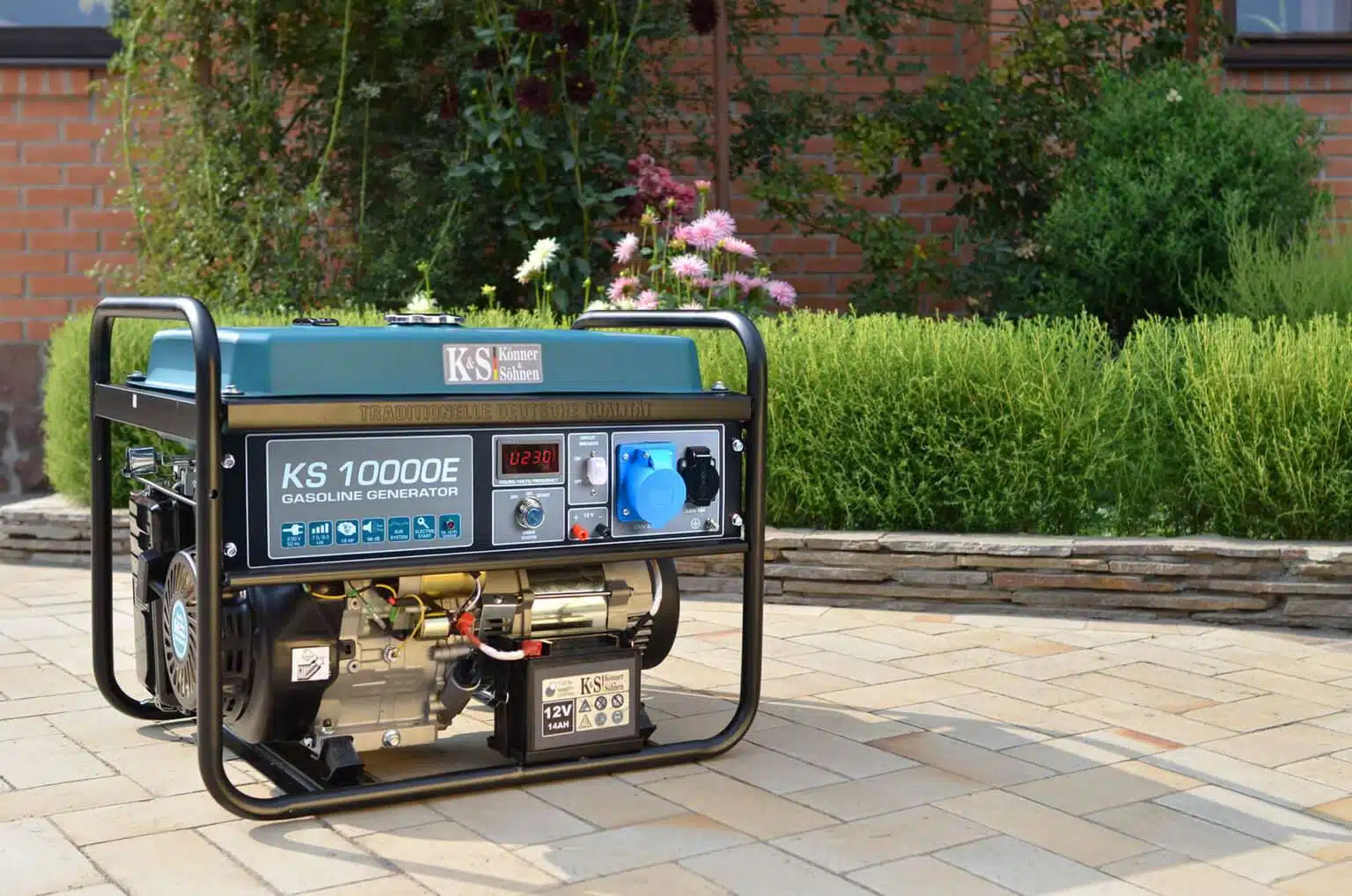
Gasoline generators are very popular amongst owners of private homes and holiday cottages. They are also used in small-scale industry, on building sites, at holiday cottages, on picnics and in emergencies. The unit is capable of operating continuously for 4–11 hours a day. Experts therefore recommend using petrol generators specifically during power cuts.
Using a petrol generator at your summer cottage allows you to carry out building and household tasks. Furthermore, it is often used in emergencies when a highly stable power source needs to be set up quickly. The advantages of a petrol generator mean you can make active use of it in almost any situation.
Petrol generator: a compact power station
Petrol generator It is a compact power station that powers domestic appliances, construction tools and a wide range of equipment. It is a reliable backup power source for private homes, holiday homes and industrial facilities. Many private homeowners wish to purchase a petrol generator, as these compact power stations have another significant advantage. This is that the generator can be used in a variety of contexts, ranging from domestic use to construction. Petrol generators are also used on picnics or on scientific expeditions.
A generator consists of an internal combustion engine (usually a four-stroke engine) and an electric generator. To improve the generator’s performance, manufacturers equip them with various features. For example, an AVR voltage stabilisation system, electric starters, a built-in ATS system and load indicators. Noise-reducing covers are used to improve the sound insulation of petrol generators.
The main strengths of petrol generators
Petrol generators These advantages make them the ideal choice home or to a summer cottage. Consequently, they are becoming increasingly popular and in demand with each passing day. The distinctive features of these generators include the following:
- Petrol generators are characterised by their light weight and high electricity output. This makes them suitable for use both in the home and in industrial settings. The compact design of petrol generators ensures their portability and significantly simplifies the transport process;
- Using petrol generators does not require any specific knowledge or skills. The engine is started manually, although more powerful models can be started using an electric starter. Almost every modern model is fitted with an AVR voltage stabilisation system, which is designed to regulate the output voltage;
- Easy to maintain. To ensure the generator runs for as long as possible, simply check the oil level in the generator before starting it. You should also check the condition of the spark plugs from time to time;
- Petrol generators are characterised by their low noise levels, which sets them apart from other generators;
- Long service life. Generators are designed for long-term, specialised use and supply equipment with high-quality electricity. This applies in particular to inverter generators;
- They can be used not only indoors but also outdoors. Temperature fluctuations and high humidity do not affect their performance.
In summary, petrol generators are suitable for use during emergency or planned power cuts for 4–11 hours a day. They are suitable for small construction and industrial sites, holiday homes, private houses and cottages, and for emergencies. Petrol generators are inexpensive; they are easy to maintain and repair. The main advantage of petrol generators is that they can be used to power even the most sensitive electrical equipment.
How to choose the right petrol generator
Petrol generator When selecting a petrol generator, it is essential to determine the correct power rating. Only by choosing and using the right model will you be able to make the most of all the benefits a petrol generator has to offer.
Depending on their power output, petrol generators can be divided into three groups:
Up to 5 kW. In appearance, these generators usually resemble suitcases, making them very convenient to transport. This type of unit is ideal for powering household appliances and lighting. Its compact size ensures the unit is portable and can even be taken out into the countryside.
Example: inverter generator KS 2000i S
Up to 10 kW. As these generators are much larger than the first type, they are sometimes fitted with special wheels. Their impressive power output makes them suitable for use at sites with average fuel consumption.
Example: petrol generator KS 12-1E ATSR
Up to 20 kW. These are the largest petrol-powered generators, capable of supplying electricity even to large sites.
Example: petrol generator KS 15-1E ATSR
When choosing a generator, you should also consider its power output, stated operating time, number of phases, fuel consumption, dimensions and start-up type.
This way, you can choose the best option for you. Genekas24 offers high-quality, durable generators for domestic and commercial use. Please contact us for customer support and personalised advice. contact page.
 Estonian
  English
  Finnish